
Unfreezing a Japanese Bank Account After a Death: What Overseas Heirs Actually Have to Do
Key Takeaways
- A Japanese bank freezes an account once it learns the holder has died. Standing payments stop, which is why utilities and management fees on an inherited property often lapse before anyone notices.
- Since 2019 an heir can withdraw a limited amount before the estate is divided — up to one third of the balance multiplied by their statutory share, capped at ¥1.5 million per financial institution.
- Full release of the account normally requires every heir to sign the bank's own form and certify their signature, which is the step that stalls families spread across several countries.
- The statutory heir information list (法定相続情報一覧図) is the single biggest time-saver, because banks accept one certified page instead of the whole document bundle.
- Freezing is not automatic on death — it happens when the bank finds out. That gives you a short window to record what leaves the account each month before it stops.
Families dealing with a Japanese estate from abroad usually expect the property to be the hard part. In practice the bank account causes the first emergency, because it stops working before anyone has decided anything.
The account holder dies. Somebody tells the bank, or the bank reads it in a local notice. The account is frozen the same day. And because that account was quietly paying the electricity, the water, the building management fee and the property insurance, those all begin to fail — on a house that is now standing empty, in a country nobody in the family lives in.
This guide covers what actually happens, what you can access before the estate is settled, and the specific document problem foreign heirs run into.
At a glance
| Question | Short answer |
|---|---|
| When does the account freeze? | When the bank learns of the death — not automatically on the date of death. |
| What stops working? | Withdrawals, transfers, and every standing payment leaving the account. |
| Can I get money out before the estate is settled? | Yes, up to a limit: one third of the balance times your statutory share, capped at ¥1.5 million per bank. |
| What is needed to release the account fully? | Proof of the heirs, and every heir's signature certified — on that bank's own form. |
| Can I do it from abroad? | Usually yes, by post, but expect several months. |
| Does each bank have its own form? | Yes. There is no common national form. |
The freeze is triggered by knowledge, not by death
Japanese banks do not receive automatic notification of deaths. An account is frozen when the bank becomes aware — usually because a relative tells them, sometimes because staff see a published funeral notice.
The reason for the freeze is protective rather than bureaucratic. From the moment of death the money belongs to the heirs collectively, and the bank has no way to know who they are. Letting one person keep withdrawing would expose the bank to claims from the others.
There is a practical consequence worth knowing, stated carefully: because the freeze depends on the bank finding out, there is normally a short interval first. Use it to gather information — download or photograph recent statements, and list every recurring payment leaving the account. Nobody needs to be told to empty an account; what families actually regret is not knowing what the account was paying for.
That list is the thing you will want two weeks later, when a utility company sends a disconnection notice in Japanese to a house nobody is living in.
What stops the day the account freezes
- Utilities. Electricity, gas and water for the property are commonly paid by direct debit. When payment fails, notices arrive at the property, then supply is cut.
- Building management and repair reserve fees. For an apartment, these keep accruing whether or not they are paid, and arrears attach to the property.
- Property insurance. A failed premium can end cover on an empty house.
- Fixed asset tax instalments. If they were being paid automatically, they stop, and the unpaid balance accrues.
- Internet, mobile, subscriptions. Minor individually, but they keep generating Japanese-language demands.
None of these wait for the estate to be settled. This is the single strongest argument for putting a Japanese contact address and a payment arrangement in place early, rather than at the end of the process.
The emergency route: withdrawing before the estate is divided
Until 2019 an heir who needed money for a funeral had no option but to wait for every other heir to agree. A reform of Japan's inheritance provisions in the Civil Code created a limited withdrawal right, and it is genuinely useful.
An individual heir may withdraw, without the other heirs' consent:
one third of the account balance at the date of death, multiplied by that heir's statutory share — subject to a ceiling of ¥1.5 million per financial institution.
Two worked figures make the shape clear. These are illustrative.
| Situation | Calculation | Available to that heir |
|---|---|---|
| Balance ¥6,000,000, two children as sole heirs (each 1/2) | ¥6,000,000 × 1/3 × 1/2 = ¥1,000,000 | ¥1,000,000 |
| Balance ¥30,000,000, two children as sole heirs (each 1/2) | ¥30,000,000 × 1/3 × 1/2 = ¥5,000,000, above the cap | ¥1,500,000 (capped) |
The cap applies per financial institution, so an estate spread across three banks has more headroom than one large account at a single bank.
Two cautions. First, you still have to prove you are an heir, so the document work below still applies — this route is faster, not documentless. Second, and more seriously: taking money out of the estate can be treated as accepting the inheritance, which may cut off your ability to renounce it later. If the estate might carry debts, or if you are still weighing renunciation, take advice before withdrawing anything. Our guide to the four options covers renunciation and its three-month deadline.
What full release requires
To close or transfer the account properly, banks generally ask for four things:
- Proof that the holder died — the death certificate, or the family register entry showing it.
- Proof of who all the heirs are — traditionally the deceased's continuous family register from birth to death, which is what demonstrates that no other children exist.
- Proof that each heir is who they say they are — identification, plus a registered seal certificate in a domestic case.
- The bank's own inheritance form, signed and sealed by every heir.
Point four is the one that surprises people. There is no standard national form. Each bank has its own, and if the estate has accounts at three banks you complete three separate sets — each of which must travel to every heir in every country and come back.
What foreign heirs use instead
A foreign national living abroad has no family register, no resident record and no registered seal. Japanese practice accepts substitutes, and they follow your nationality rather than your country of residence.
| Normally required | Japanese national abroad | Foreign national |
|---|---|---|
| Family register proving the heirs | Request it from the Japanese municipality | Birth, marriage and death certificates from your country, plus a sworn statement of the family relationships |
| Resident record | Proof of residence (在留証明) from a Japanese embassy or consulate | Notarised affidavit of residence |
| Registered seal certificate | Signature certificate (署名証明) from a Japanese embassy or consulate | Signature notarised locally, often with an apostille |
All foreign-issued documents are submitted with a Japanese translation. We cover this document substitution in more depth, including how it applies to the property register, in our guide to inheritance registration for foreign heirs.
Individual banks vary in what they will accept, and some branches see a foreign estate rarely. Ask the bank's inheritance desk what they need before you start collecting documents — not after.
The one document that shortens everything
If the estate involves more than one bank, or a bank and a property, obtain a statutory heir information list (法定相続情報一覧図) first.
You submit the full proof-of-heirship bundle to the Legal Affairs Bureau once. They verify it and issue certified copies of a single page showing the deceased and the heirs. Banks accept that page in place of the bundle, and the copies are free.
Without it, the original documents travel to bank one, wait, come back, then go to bank two. With it, you approach every institution at the same time. On a typical estate this is the difference between months and weeks.
Realistic timeline
| Stage | Typical elapsed time |
|---|---|
| Notifying the bank and receiving their forms | 1–3 weeks |
| Collecting and certifying documents abroad | 1–3 months |
| Obtaining the statutory heir information list | 2–4 weeks |
| Circulating the bank's form to all heirs and back | 1–4 months, driven by how many countries are involved |
| Bank processing after a complete submission | 2–6 weeks |
Six months from death to released funds is a reasonable expectation for a straightforward overseas estate. A year is not unusual where heirs are scattered or a document has to be reissued.
One more deadline nobody mentions
Japan has a dormant deposits system: accounts with no transactions for ten years can be transferred out of the bank and put toward public-interest use. The money is not confiscated — it can still be claimed afterwards through the bank — but the claim becomes an additional procedure on top of the inheritance one.
This matters for the family accounts nobody knew about: an old passbook found in a drawer years later, or a regional bank account from a grandparent's generation. If you suspect there are accounts you have not identified, look for them early rather than after the property is dealt with.
Practical order of operations
- Before anything else, list what the account pays for. Statements, direct debit records, anything that shows recurring payments.
- Deal with the property's running costs separately. Assume the account will stop paying them and arrange another route.
- Contact each bank's inheritance desk and ask specifically what they accept from heirs who are not Japanese residents.
- Check the renunciation question before withdrawing anything — three months from learning of the inheritance, and taking estate money can foreclose the option.
- Apply for the statutory heir information list early.
- Use the limited withdrawal route if you need funds now for the funeral or urgent property costs.
- Circulate the bank forms once, with everything else already in hand.
A note on advice
This article describes general procedure so you know what to expect and what to ask for. It is not legal or tax advice. Bank requirements differ between institutions and are applied case by case, and renunciation has consequences that depend on your specific circumstances. Confirm your position with a qualified professional before acting.
How Japan YES helps
We do not act on bank accounts on your behalf and we are not a law firm. What we do is take away the pressure that the frozen account creates.
We act as your tax representative (納税管理人) and Japanese contact address, so the notices about the property reach a person who reads Japanese instead of an empty letterbox. We scan and translate them, tell you which are urgent, and pay utility bills and management fees on your behalf while the estate is being settled — which stops the electricity being cut off on a house you are trying to sell.
Tell us what the situation is and we will tell you what needs handling this month, or compare plans — from ¥66,000 per year, tax included.
Frequently Asked Questions
When does a Japanese bank freeze an account after a death?
When the bank becomes aware of the death, not automatically on the date of death. Japanese banks do not receive automatic notification, so the freeze is usually triggered by a relative informing them or by staff seeing a published notice. Once frozen, withdrawals, transfers and all standing payments from the account stop.
Can I withdraw money from a Japanese account before the estate is divided?
Yes, within a limit. Since 2019 an individual heir may withdraw one third of the account balance at the date of death multiplied by their statutory share, capped at 1.5 million yen per financial institution, without the other heirs consenting. You still have to prove you are an heir. Be aware that taking estate money can be treated as accepting the inheritance, which may prevent you renouncing it later.
What documents does an overseas heir need to release a Japanese bank account?
Proof of the death, proof of who all the heirs are, identification for each heir, and the bank own inheritance form signed by every heir. A foreign national living abroad substitutes civil records from their country plus a sworn statement for the family register, a notarised affidavit of residence for the resident record, and a notarised or apostilled signature for the registered seal certificate. All foreign documents need a Japanese translation.
Do all Japanese banks use the same inheritance form?
No. There is no standard national form. Each bank has its own, so an estate with accounts at three banks means three separate sets of paperwork, each of which must travel to every heir and back. This is a major reason overseas estates take so long.
What is the fastest way to speed up a Japanese bank inheritance from overseas?
Obtain a statutory heir information list (法定相続情報一覧図) from the Legal Affairs Bureau before approaching the banks. You submit the full proof-of-heirship bundle once, and receive certified copies of a single page that banks accept in place of the whole set. Certified copies are free, and it lets you approach every institution at the same time instead of circulating originals one by one.
What happens to the property bills when the account is frozen?
They stop being paid. Utilities, building management and repair reserve fees, property insurance premiums and any automatic fixed asset tax payments all fail, and notices then arrive at the property in Japanese. On an inherited house that is standing empty this often means the electricity is cut off and insurance lapses before anyone abroad notices, so arrange another payment route early.
How long does a Japanese bank inheritance take for heirs living abroad?
Six months from the date of death to released funds is a reasonable expectation for a straightforward overseas estate. Collecting and certifying documents abroad typically takes one to three months, circulating the bank form to all heirs takes one to four months depending on how many countries are involved, and the bank then needs two to six weeks after a complete submission.
What happens to a Japanese bank account nobody claims?
Japan has a dormant deposits system under which accounts with no transactions for ten years can be transferred out of the bank and put toward public-interest use. The money is not confiscated and can still be claimed through the bank afterwards, but it becomes an extra procedure on top of the inheritance one. Old passbooks found years later are the common case.
Sources
This article is based on official Japanese government information.
- Ministry of Justice — Reform of the Civil Code inheritance provisions (法務省 民法及び家事事件手続法の一部を改正する法律)
- Legal Affairs Bureau — Statutory Heir Information Certification System (法務局 法定相続情報証明制度)
- Ministry of Justice — Mandatory inheritance registration (法務省 相続登記の申請義務化)
- Courts in Japan — Application for renunciation of inheritance (裁判所 相続の放棄の申述)
About the author
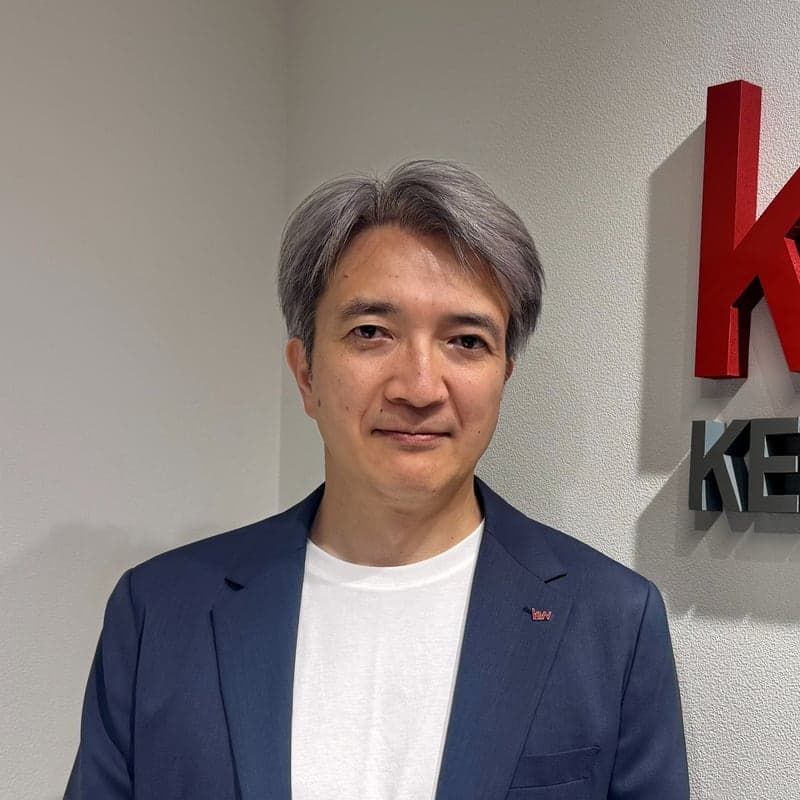
Yuichi Suzuki(鈴木 裕一)
Founder, Japan YES Property Management · Licensed 宅地建物取引士 (Saitama No. 087841) · Keller Williams Saitama agent
Yuichi helps overseas owners run their Japanese property from abroad — tax representative filings, mail scanning and translation, bill payments and coordination with local companies, in English and Chinese.
Company overviewPurchased Japanese Property from Overseas? Let Us Handle the Management.
Japan YES specializes in remote property management — tax representation (納税管理人), mail scanning & translation, utility payments, and local coordination.
Japan YES Property Management
Managing Japanese property from abroad?
Let us handle it — tax representative registration, mail digitization, and local coordination, all managed remotely.
Free plan available · No credit card required
More Articles
Inheriting Property in Japan as a Foreign Heir: The Document Problem Nobody Warns You About
You have no koseki, no juminhyo, and no registered seal — yet every Japanese inheritance checklist assumes all three. What actually replaces them, how the 2024 registration deadline works, and the stopgap filing that stops the fine while your family decides.
Law & ComplianceInherited a House in Japan While Living Abroad? Your 4 Options, Compared
Overseas heirs of Japanese property face new mandatory registration rules and a 6× tax risk for neglected houses. Compare your four realistic options — sell, rent, keep, or give it up — with costs, deadlines, and the one thing you cannot do: nothing.
TaxThe ¥30 Million Deduction Most Overseas Heirs Miss When Selling an Inherited Japanese Home
Japan lets you deduct up to ¥30 million from the capital gain when you sell a home you inherited — but the conditions are narrow, the clock is short, and renting it out for a few months destroys it. What actually qualifies, and what disqualifies you without warning.
InvestmentWhere to Buy an Akiya in Japan: How Regions Differ for Foreign Buyers
The same ¥3 million budget buys a completely different problem depending on where you buy. How akiya differ across remote rural areas, regional cities, Kyoto, the big-city fringe, and resort towns — in price, contractor availability, rules, and whether you can ever sell it again.