
Will or No Will: How It Changes a Japanese Inheritance for Overseas Families
Key Takeaways
- Without a will, every heir must sign and certify a division agreement. One unreachable heir stops the entire estate, which is why scattered families take so long.
- With a will, a named executor (遺言執行者) can act for the estate, so the property and bank accounts can be dealt with without collecting every signature.
- A handwritten will normally needs a family court verification step (検認) before it can be used, which adds months. A notarial will, or a handwritten will lodged with the Legal Affairs Bureau under the storage system, skips it.
- A will does not override everything: close family have a reserved share (遺留分) they can claim in money if the will leaves them too little.
- For a foreign national, Japan's conflict-of-laws rules generally point to the law of the deceased's nationality to govern succession — but Japanese registration and tax procedure still apply to the Japanese property.
Families dealing with a Japanese estate from abroad usually discover the importance of a will in the worst possible way: months in, when the process has stopped because a cousin in a third country will not return a signed form.
This article sets out what actually differs between an estate with a will and one without, in the specific context of overseas heirs and Japanese real estate. It also covers the question that foreign families almost always miss — which country's law governs the succession in the first place.
At a glance
| Question | No will | With a valid will |
|---|---|---|
| Who decides who gets what? | All heirs, unanimously | The deceased, in the will |
| Whose signature is needed? | Every heir, certified | The executor, if one is named |
| What stops the process? | One heir who will not or cannot sign | Rarely anything procedural |
| Is a court step involved? | No, unless heirs go to mediation | Verification for a handwritten will, unless it was lodged with the Legal Affairs Bureau |
| Can close family still claim? | They take their statutory share | Yes — a reserved share, claimed in money |
| Typical elapsed time, overseas family | 6 months to several years | Often 2 to 6 months |
What happens with no will
If there is no will, Japanese law sets out who the heirs are and what fraction each takes. Those shares are the starting point, not the outcome: the heirs are free to divide the estate differently if they all agree.
Agreement is recorded in a division agreement (遺産分割協議書). Every heir must sign it and certify their signature. A partly signed agreement is not partly effective — it has no effect at all.
For a family living in one country, this is a Sunday afternoon and a trip to a local office. For a family spread across three countries, each heir must find a notary or a Japanese consulate, certify their signature, and post certified originals to Japan. Every additional heir adds a country, a postal round trip, and a chance that a document is rejected and has to be redone.
Two situations make it worse. If an heir has died, their own heirs step into their place, so the number of signatures grows with every generation that passes. And if an heir lacks legal capacity, a court-appointed representative must be involved before anything can be signed.
The 2024 partial remedy
Japan made inheritance registration compulsory in April 2024, and introduced a stopgap filing — heir reporting registration (相続人申告登記) — that a single heir can file alone. It records that you are an heir and satisfies the registration obligation, so the fine does not apply while the family is still negotiating.
It does not transfer ownership and it does not let you sell. It buys time. We cover it, and the document substitutes foreign heirs need, in our guide to inheritance registration for foreign heirs.
What changes when there is a will
A valid will replaces the unanimous-agreement requirement with an instruction. That single change is why estates with wills move so much faster.
The bigger practical gain is the executor (遺言執行者). If the will names one, that person has authority to carry out the will — dealing with the registration of the property, and with banks — without gathering signatures from every heir in every country.
For an overseas family this is the difference between one person completing a task and eight people coordinating across time zones. If you are advising an older relative who owns Japanese property and has family abroad, naming an executor is the single most useful thing they can do.
The three types of Japanese will, and the one that saves months
| Type | How it is made | Court verification needed? |
|---|---|---|
| Handwritten (自筆証書遺言) | Written by hand by the testator | Yes — unless lodged with the Legal Affairs Bureau under the storage system |
| Notarial (公正証書遺言) | Made at a notary office with witnesses; the original is kept there | No |
| Sealed (秘密証書遺言) | Contents kept secret, existence certified by a notary | Yes |
Verification (検認) is not approval
A handwritten will normally has to go through verification at the family court before it can be used. This is commonly misunderstood: verification records the form and content of the document and prevents later alteration. It does not decide whether the will is valid.
What matters to an overseas family is the practical effect. Verification requires the court to notify all heirs, which means assembling the same proof-of-heirship documents you were trying to avoid, and waiting. It is normal for this to add months. Opening a sealed handwritten will without the court is also a mistake — the will is not automatically void, but there is a penalty, and it complicates matters.
The storage system removes that step
Since 2020 a handwritten will can be lodged with the Legal Affairs Bureau under a formal storage system. The bureau checks the formal requirements, stores the original, and a will held this way does not require court verification.
For a Japanese national with family abroad who does not want the cost of a notarial will, this is the practical middle path: cheaper than a notarial will, and it removes the step that hurts overseas heirs most.
What a will cannot do: the reserved share
A will does not give complete freedom. Close family members — broadly the spouse, children, and in some circumstances parents — have a reserved share (遺留分). Siblings do not.
Since the 2019 reform, a reserved share claim is a claim for money, not for a piece of the property itself. This is a significant improvement for anyone dealing with real estate: a disappointed heir can no longer end up as an unwanted co-owner of a house you are trying to sell. They are owed a sum instead.
The claim is also time-limited, and the periods are short — measured from when the person learns of the inheritance and of the gift or bequest that reduces their share. If you think you may be affected, on either side, take advice early rather than assuming silence has settled it.
The question foreign families always miss: whose law applies?
Everything above describes Japanese succession law. Whether Japanese succession law governs your case at all is a separate question.
Japan's conflict-of-laws statute — the Act on General Rules for Application of Laws — points, for succession, to the national law of the deceased. So if the person who died was a citizen of another country, the law of that country may govern who inherits and in what shares, even though the house is in Japan.
Three consequences follow.
- A will valid abroad may work for the Japanese property. It is not automatic, and how it is proved to a Japanese registry is a technical question, but a foreign will is not simply disregarded.
- The shares may not be the Japanese ones. If the deceased's national law gives different shares, that is what applies to the succession, not the Japanese fractions.
- Procedure stays Japanese regardless. Whoever inherits, the property is registered under Japanese registration procedure, on Japanese deadlines, with Japanese documents. Japanese inheritance tax rules also apply on their own terms — see our inheritance tax guide for who is actually liable.
There is a further wrinkle. Some countries' rules point back to the law of the place where the property sits, which can return the question to Japanese law for the real estate. This is genuinely specialist territory. The useful takeaway is not the doctrine but the instruction: if the deceased was not a Japanese national, ask a lawyer which law governs before anyone starts drafting a division agreement. Families have completed an entire agreement under the wrong assumption and had to start again.
If you are planning ahead rather than reacting
Much of the difficulty described here is avoidable at the drafting stage. For an owner of Japanese property whose family lives abroad:
- Name an executor. The largest single saving in time and stress.
- Use a notarial will, or lodge a handwritten one with the Legal Affairs Bureau. Either removes the court verification step.
- Deal with the Japanese property explicitly. A will that covers assets in general, drafted in another country, may leave the Japanese registry unsure what to do with a specific parcel of land.
- Tell the family where the will is. A perfect will nobody can find is worth nothing, and the storage system includes a way for heirs to check whether one exists.
- Keep a list of Japanese assets. Bank accounts, the property, and the location of the deeds. Heirs abroad frequently do not know what exists.
A note on advice
This article describes general principles so you know what to expect and what to ask about. It is not legal advice. Which law applies, whether a foreign will can be used for Japanese property, and how reserved shares work in your family all depend on specific facts. Wills and succession disputes are handled by lawyers, and property registration by judicial scriveners (司法書士). Confirm your position with an appropriate professional before acting.
How Japan YES helps
We are not a law firm and we do not draft wills. What we do is hold the practical side together while the legal process runs.
We act as your tax representative (納税管理人) and Japanese contact address, receive and scan the post that arrives for the property, translate it so you can see what is urgent, and pay bills on your behalf. When you need a lawyer, a judicial scrivener or a licensed tax accountant, we introduce you to one.
Tell us about your situation and we will tell you what needs attention now, or compare plans — from ¥66,000 per year, tax included.
Frequently Asked Questions
What happens to a Japanese estate if there is no will?
Japanese law sets out who the heirs are and their statutory shares, but the heirs can divide the estate differently if they all agree. That agreement is recorded in a division agreement (遺産分割協議書), which every heir must sign and certify. A partly signed agreement has no effect at all, so a single unreachable or unwilling heir stops the entire estate.
How does a will speed up a Japanese inheritance for overseas heirs?
A will replaces the requirement for unanimous agreement with an instruction from the deceased. More importantly, if the will names an executor (遺言執行者), that person can carry out the will — including registering the property and dealing with banks — without collecting certified signatures from every heir in every country. For a family spread across several countries this is usually the difference between a few months and a few years.
Does a handwritten Japanese will have to go to court?
Normally yes. A handwritten will (自筆証書遺言) requires verification (検認) at the family court before it can be used, and the court must notify all heirs, which adds months. There are two ways to avoid it: a notarial will (公正証書遺言) needs no verification, and since 2020 a handwritten will lodged with the Legal Affairs Bureau under the storage system is also exempt.
What is the reserved share (遺留分) in Japanese inheritance?
It is a minimum entitlement for close family — broadly the spouse, children and in some circumstances parents — that a will cannot remove. Siblings do not have one. Since the 2019 reform the claim is for money rather than for a share of the property itself, so a disappointed heir cannot become an unwanted co-owner of a house you are trying to sell. The claim is subject to short time limits.
Which country law applies when a foreign national who owned Japanese property dies?
Japan conflict-of-laws statute points, for succession, to the national law of the deceased. So if the person who died was a citizen of another country, that country law may govern who inherits and in what shares, even though the property is in Japan. Some countries rules point back to the location of the property, which can return the question to Japanese law. Whatever the answer, Japanese registration procedure and Japanese tax rules still apply to the Japanese property, so confirm which law governs before drafting any agreement.
Can a will made outside Japan be used for Japanese property?
It is not automatically disregarded. Where the deceased national law governs the succession, a will valid under that law can be relevant to the Japanese property, but how it is proved to a Japanese registry is a technical question that depends on the document and the country. Take specialist advice rather than assuming either that a foreign will works or that it does not.
What should someone with Japanese property and family abroad put in their will?
Name an executor, which is the single largest saving in time and stress. Use a notarial will or lodge a handwritten one with the Legal Affairs Bureau so that court verification is not needed. Deal with the Japanese property explicitly rather than relying on a general clause about assets. Tell the family where the will is, and leave a list of Japanese assets including bank accounts and the property, because heirs abroad frequently do not know what exists.
Sources
This article is based on official Japanese government information.
- Courts in Japan — Verification of a will (裁判所 遺言書の検認)
- Ministry of Justice — Handwritten Will Storage System (法務省 自筆証書遺言書保管制度)
- Legal Affairs Bureau — Statutory Heir Information Certification System (法務局 法定相続情報証明制度)
- Ministry of Justice — Mandatory inheritance registration (法務省 相続登記の申請義務化)
- Courts in Japan — Application for renunciation of inheritance (裁判所 相続の放棄の申述)
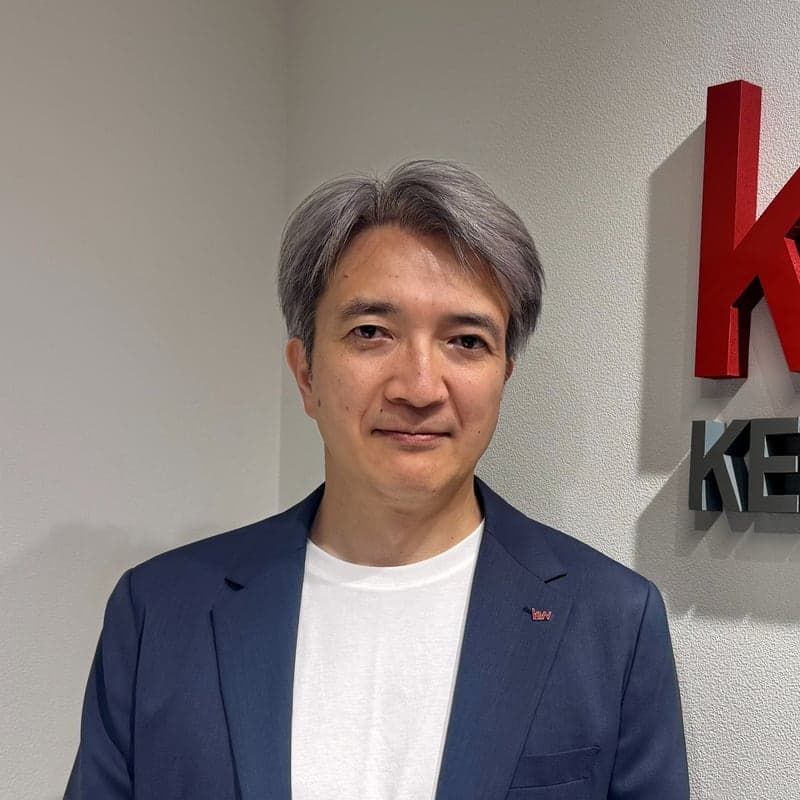
About the author
Yuichi Suzuki(鈴木 裕一)
Founder, Japan YES Property Management · Licensed 宅地建物取引士 (Saitama No. 087841) · Keller Williams Saitama agent
Yuichi helps overseas owners run their Japanese property from abroad — tax representative filings, mail scanning and translation, bill payments and coordination with local companies, in English and Chinese.
Company overviewPurchased Japanese Property from Overseas? Let Us Handle the Management.
Japan YES specializes in remote property management — tax representation (納税管理人), mail scanning & translation, utility payments, and local coordination.
Japan YES Property Management
Managing Japanese property from abroad?
Let us handle it — tax representative registration, mail digitization, and local coordination, all managed remotely.
Free plan available · No credit card required
More Articles
Unfreezing a Japanese Bank Account After a Death: What Overseas Heirs Actually Have to Do
The moment a Japanese bank learns an account holder has died, the account stops. Direct debits fail, the property's utilities lapse, and no heir can touch the money until every heir has signed. Here is the process, the emergency withdrawal route, and what changes when you live abroad.
Law & ComplianceInheriting Property in Japan as a Foreign Heir: The Document Problem Nobody Warns You About
You have no koseki, no juminhyo, and no registered seal — yet every Japanese inheritance checklist assumes all three. What actually replaces them, how the 2024 registration deadline works, and the stopgap filing that stops the fine while your family decides.
TaxThe ¥30 Million Deduction Most Overseas Heirs Miss When Selling an Inherited Japanese Home
Japan lets you deduct up to ¥30 million from the capital gain when you sell a home you inherited — but the conditions are narrow, the clock is short, and renting it out for a few months destroys it. What actually qualifies, and what disqualifies you without warning.
InvestmentWhere to Buy an Akiya in Japan: How Regions Differ for Foreign Buyers
The same ¥3 million budget buys a completely different problem depending on where you buy. How akiya differ across remote rural areas, regional cities, Kyoto, the big-city fringe, and resort towns — in price, contractor availability, rules, and whether you can ever sell it again.