
The ¥30 Million Deduction Most Overseas Heirs Miss When Selling an Inherited Japanese Home
Key Takeaways
- The special deduction lets you subtract up to ¥30 million from the capital gain on selling an inherited home. It applies to sales made up to December 31, 2027.
- For sales from January 1, 2024, if three or more heirs acquired the property the deduction drops to ¥20 million each.
- The house must have been built on or before May 31, 1981, must not be a registered condominium unit, and nobody other than the deceased may have been living there immediately before the death.
- You must sell by December 31 of the year containing the third anniversary of the death, for ¥100 million or less, and the property must not have been rented, lived in, or used for business at any point between the inheritance and the sale.
- Non-resident sellers can use the deduction, but the buyer still withholds 10.21% of the price at settlement and you recover the difference by filing a Japanese tax return.
Selling an inherited Japanese house is often the cleanest way out of a property nobody in the family can look after. What surprises overseas heirs is the tax bill — particularly when the original purchase records are long gone and the acquisition cost has to be treated as just 5% of the sale price, leaving almost the entire proceeds taxable as gain.
There is a relief designed for exactly this situation. It is officially the special deduction for capital gains on a deceased person's residence, and everyone in Japan calls it the akiya deduction (空き家の3,000万円特別控除). It can remove up to ¥30 million from the taxable gain.
It is also one of the easiest reliefs to lose by accident. Below is what qualifies, what quietly disqualifies you, and the order in which to check.
At a glance
| Question | Short answer |
|---|---|
| How much can I deduct? | Up to ¥30 million from the capital gain. |
| What if there are several heirs? | For sales from January 1, 2024, three or more heirs means ¥20 million each. |
| How old must the house be? | Built on or before May 31, 1981. |
| What is the deadline to sell? | December 31 of the year containing the third anniversary of the death. |
| Is there a price ceiling? | Yes — ¥100 million or less. |
| Can I rent it out first? | No. Any rental, business use, or occupation between inheritance and sale disqualifies it. |
| Does the scheme have an end date? | It currently applies to sales up to December 31, 2027. |
Why this relief exists at all
Japan has a very large stock of older houses standing empty after an owner dies. Left alone, they deteriorate, become a safety problem for the neighbourhood, and eventually cost the municipality money. The relief is a nudge: sell the house — ideally to someone who will bring it up to modern earthquake standards, or clear the site — rather than leaving it to rot.
That policy purpose explains almost every condition attached to it. Once you see the logic, the conditions stop looking arbitrary.
The seven conditions, in the order worth checking
1. The house was built on or before May 31, 1981
This is the cut-off for Japan's old earthquake-resistance standard. Houses built after it already meet the newer standard, so they are not the problem the relief targets. This is the fastest condition to check and the one that eliminates most properties, so check it first — the construction date appears on the property register.
2. It is not a registered condominium unit
Apartments in a building with registered sectional ownership (区分所有建物登記) are excluded. The relief is aimed at detached houses and their land.
3. Nobody else was living there immediately before the death
The deceased must have been living there alone. If a child, sibling or tenant was also resident, the relief does not apply.
There is an important exception. If the deceased moved into a care home after being certified as requiring nursing care, the house can still qualify, provided the further conditions in the care-home rules are met — the house must have stayed empty of other occupants and kept the deceased's possessions. Japan's tax authority covers this situation separately, and it is worth checking properly rather than assuming a care-home move ends the matter.
4. It has stayed empty since the inheritance
This is where families lose the relief without realising. Between the moment of inheritance and the moment of sale, the property must not have been used for business, rented out, or lived in — by anyone, including you.
Renting it out for six months to cover the fixed asset tax while you decide feels sensible. It destroys a deduction worth up to ¥30 million. So does letting a relative stay there rent-free. If the deduction is on your radar at all, keep the house empty until it is sold.
5. Either the earthquake standard is met, or the house comes down
At the point of sale, the house must either satisfy the required earthquake standard — evidenced by a certificate — or have been demolished, leaving the land alone.
A 2024 change made this considerably easier. For sales from January 1, 2024, the retrofit or demolition can be completed after the sale, as long as it is done by February 15 of the following year. In practice that means the buyer can carry out the work, which removes the awkward requirement that the seller pay for a demolition on a house they are about to hand over.
6. Sold by December 31 of the third year
The deadline is the 31st of December of the year containing the third anniversary of the death. Note how this interacts with the inheritance registration deadline described in our guide to registration for foreign heirs: registration also runs on a three-year clock, and you generally cannot sell before the title is in your name. For an overseas family, those two clocks running together are the real constraint.
7. Sale price of ¥100 million or less
Straightforward on its face, with a trap underneath. The ¥100 million test is applied to the total proceeds from the property, including parts sold separately and parts sold by other heirs, over the period ending December 31 of the third year after the sale.
So if you sell the house for ¥80 million and claim the deduction, and a sibling later sells an adjoining strip of the same land for ¥30 million, the combined figure breaks the ceiling — and you must file an amended return and pay the tax within four months of that later sale. Coordinate with your co-heirs before anyone signs anything.
Two more conditions that catch families out
- Not sold to a relative. Sales to close family, people who share your household finances, or someone who will live in the house with you afterwards are excluded.
- Not combined with certain other reliefs. If you have already used the relief that adds inheritance tax to the acquisition cost, or certain compulsory-purchase deductions, on the same property, you cannot also use this one. Only one deduction per property per deceased person.
The document you cannot skip
Claiming the deduction requires a Japanese tax return with supporting documents attached. The one people do not expect is the 被相続人居住用家屋等確認書 — a confirmation letter issued by the municipality where the property sits, certifying that the deceased lived there, that nobody else did, and that the house has been empty since.
You apply to the municipal office for it. It is not automatic, it takes time, and it is issued in Japanese only. From overseas, this is usually the step that needs someone on the ground.
Alongside it you will need a certified copy of the property register showing the construction date and that it is not a condominium unit, the sale contract showing the price, and either the earthquake certificate or proof of demolition.
If you are a non-resident, two extra things happen
The deduction itself is not restricted to people living in Japan. But the mechanics of a non-resident sale differ in ways that matter to your cash flow.
The buyer withholds 10.21% at settlement. When a non-resident sells Japanese land or buildings, the buyer is generally required to withhold 10.21% of the gross price and pay it to the tax office. This is withholding on the price, not on the gain — so it happens even where your final tax after the deduction is zero. You recover the excess by filing a return.
You need someone in Japan to receive tax correspondence. A non-resident filing a Japanese return generally appoints a tax representative (納税管理人) so the tax office has a domestic point of contact. Our tax representative guide explains what that involves.
The practical consequence: even in a clean case, expect the money to arrive in two stages — the sale proceeds minus 10.21% at settlement, then a refund after the return is processed.
Worked example
The figures below are illustrative only, to show the shape of the calculation rather than to predict your result.
| Item | Without the deduction | With the deduction |
|---|---|---|
| Sale price | ¥25,000,000 | ¥25,000,000 |
| Acquisition cost (records lost, deemed 5%) | ¥1,250,000 | ¥1,250,000 |
| Selling expenses | ¥1,000,000 | ¥1,000,000 |
| Taxable gain before deduction | ¥22,750,000 | ¥22,750,000 |
| Special deduction | — | ¥22,750,000 (capped at ¥30m) |
| Taxable gain after deduction | ¥22,750,000 | ¥0 |
The point of the example is the second row. When the original purchase paperwork from decades ago cannot be found, Japan treats the acquisition cost as 5% of the sale price — meaning roughly 95% of the proceeds are treated as gain. That is precisely the situation the deduction was built for, and it is why the relief is worth real money on a modest rural house.
What to check, in order
- Pull the property register and confirm the construction date is on or before May 31, 1981, and that it is not a condominium unit.
- Confirm the deceased lived there alone immediately before death, or that the care-home exception applies.
- Work out your deadline: December 31 of the year containing the third anniversary of the death.
- Count the heirs who acquired the property — three or more means ¥20 million each rather than ¥30 million.
- Agree with all co-heirs that nothing else from the same property will be sold in a way that breaches the ¥100 million ceiling.
- Keep the property completely empty. No tenants, no relatives, no storage business.
- Apply early to the municipality for the confirmation letter.
- Decide with the buyer who handles the retrofit or demolition, and by when.
A note on advice
This article describes the shape of a Japanese tax relief so you know whether it is worth pursuing and what to ask about. It is not tax advice. The conditions summarised here have detailed sub-rules, the scheme has an end date that has been extended before, and your own position depends on facts specific to your family. Tax filings in Japan are handled by licensed tax accountants (税理士) — confirm your position with one before relying on any of this.
How Japan YES helps
The steps in this article that are hard from abroad are the local ones: obtaining the municipal confirmation letter, receiving and understanding Japanese correspondence about the property, and keeping the house genuinely empty and insured while it is on the market.
We act as your tax representative (納税管理人) and Japanese contact address, scan and translate the post that arrives for the property, and introduce you to a licensed tax accountant for the filing itself rather than pretending to be one.
Tell us about the property you inherited and we will tell you which clocks are already running, or compare plans — from ¥66,000 per year, tax included.
Frequently Asked Questions
How much is the special deduction for selling an inherited home in Japan?
Up to 30 million yen can be deducted from the capital gain when you sell a home you inherited, provided the conditions are met. For sales made on or after January 1, 2024, if three or more heirs acquired the property the deduction is reduced to 20 million yen each. The scheme currently applies to sales made up to December 31, 2027.
Which houses qualify for the Japanese inherited home deduction?
The house must have been built on or before May 31, 1981, must not be a registered condominium unit, and nobody other than the deceased may have been living there immediately before the death. There is an exception where the deceased had moved into a care home after being certified as needing nursing care, subject to further conditions.
Can I rent out an inherited Japanese house before selling it and still claim the deduction?
No. The property must not have been used for business, rented out, or lived in by anyone at any point between the inheritance and the sale. Renting it out even briefly to cover holding costs disqualifies the deduction entirely, as does letting a relative stay there rent-free.
What is the deadline for selling an inherited home to claim the deduction?
You must sell by December 31 of the year containing the third anniversary of the death. Note that inheritance registration must also normally be completed before you can sell, and that has its own three-year deadline, so for an overseas family the two clocks run together.
Does the 100 million yen price limit apply to my sale only?
No. The limit is tested against the total proceeds from the property, including parts sold separately and parts sold by other heirs, measured up to December 31 of the third year after your sale. If a later sale by a co-heir pushes the combined figure over 100 million yen, you must file an amended return and pay the tax within four months of that sale.
Can a non-resident claim the inherited home deduction in Japan?
The deduction itself is not limited to residents, but the mechanics differ. When a non-resident sells Japanese property, the buyer generally withholds 10.21% of the gross sale price and pays it to the tax office, regardless of whether tax is ultimately due. You claim the deduction by filing a Japanese tax return and recover the excess withholding as a refund. A tax representative is normally appointed so the tax office has a contact in Japan.
Who has to demolish the house or bring it up to earthquake standards?
At the time of sale the house must either meet the required earthquake standard or have been demolished. For sales from January 1, 2024, the work can be completed after the sale as long as it is done by February 15 of the following year, which means the buyer can carry it out. Agree explicitly with the buyer who does the work and by when, because the deadline is part of the tax condition.
Sources
This article is based on official Japanese government information.
- National Tax Agency No.3306 — Special deduction for selling an inherited home (国税庁 被相続人の居住用財産(空き家)を売ったときの特例)
- National Tax Agency No.3208 — Long-term capital gains tax calculation (国税庁 長期譲渡所得の税額の計算)
- National Tax Agency No.2879 — Withholding when buying land from a non-resident (国税庁 非居住者等から土地等を購入したとき)
- National Tax Agency No.3302 — Special rules for selling your own home (国税庁 マイホームを売ったときの特例)
- MLIT — Vacant Houses Special Measures Act (国土交通省 空家等対策の推進に関する特別措置法)
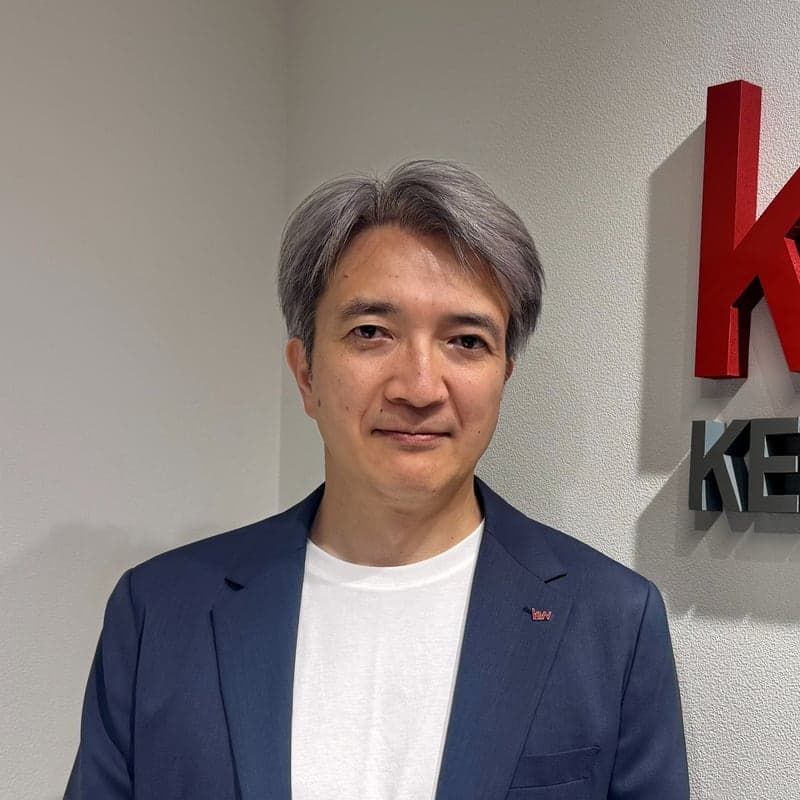
About the author
Yuichi Suzuki(鈴木 裕一)
Founder, Japan YES Property Management · Licensed 宅地建物取引士 (Saitama No. 087841) · Keller Williams Saitama agent
Yuichi helps overseas owners run their Japanese property from abroad — tax representative filings, mail scanning and translation, bill payments and coordination with local companies, in English and Chinese.
Company overviewPurchased Japanese Property from Overseas? Let Us Handle the Management.
Japan YES specializes in remote property management — tax representation (納税管理人), mail scanning & translation, utility payments, and local coordination.
Japan YES Property Management
Managing Japanese property from abroad?
Let us handle it — tax representative registration, mail digitization, and local coordination, all managed remotely.
Free plan available · No credit card required
More Articles
Inheriting Property in Japan as a Foreign Heir: The Document Problem Nobody Warns You About
You have no koseki, no juminhyo, and no registered seal — yet every Japanese inheritance checklist assumes all three. What actually replaces them, how the 2024 registration deadline works, and the stopgap filing that stops the fine while your family decides.
InvestmentWhere to Buy an Akiya in Japan: How Regions Differ for Foreign Buyers
The same ¥3 million budget buys a completely different problem depending on where you buy. How akiya differ across remote rural areas, regional cities, Kyoto, the big-city fringe, and resort towns — in price, contractor availability, rules, and whether you can ever sell it again.
InvestmentHow to Buy an Akiya in Japan: The Step-by-Step Process for Foreign Buyers
Foreigners can buy Japanese vacant houses with no ownership restrictions — but the process runs on Japanese paperwork, a licensed agent's briefing, and a judicial scrivener. The full sequence from finding a property to the obligations that start the day you own it.
Getting StartedLocal Agent Representation in Japan: What a "Registered Agent" Actually Means for Non-Residents
Japan has no single "registered agent" like the US. Instead the job is split into distinct roles — tax representative (納税管理人), domestic contact (国内連絡先), domestic manager (国内管理人). Which ones you need, what each covers, what they cost, and whether to find one yourself or use a service.