
What a Japanese Home Inspection Actually Checks — and What It Misses
Key Takeaways
- Two different things are called an inspection in Japan. The regulated one, 建物状況調査, is a visual, non-destructive survey carried out by an architect who has completed national training (既存住宅状況調査技術者), and it is limited to the structural parts of the building and the parts that keep rain out.
- It does not price repairs, predict how long the house will last, confirm the building is legal, or test the boiler, plumbing and wiring. Those are separate checks you have to ask for by name.
- The expensive problems — rot, termite damage, long-running leaks — are found under the floor and in the roof space. Entry into those spaces is normally a paid option, not part of the standard survey.
- Most akiya are sold as-is with the seller's liability for defects excluded (契約不適合責任免責). Once you sign, a defect is your problem, which makes the inspection the only real protection you have.
- Defect insurance for a second-hand purchase (既存住宅売買瑕疵保険) requires the house to pass an inspection and, as a rule, to have been built under the post-June 1981 earthquake code — one more reason the build date decides what a house is worth.
Every guide to buying property in Japan, including ours, tells you the same thing: get the house inspected before you commit. Very few explain what you actually receive for the money — and that gap is where overseas buyers get hurt.
A buyer who orders "an inspection" in Japan and assumes it works like a full structural survey at home can end up with a short report saying the visible parts of the house look normal, no idea what anything costs to fix, and no comeback against the seller when the bathroom floor gives way eighteen months later.
This guide sets out what the standard Japanese survey covers, what it deliberately leaves out, what to add, and how to arrange the whole thing from outside Japan.
At a glance
| Question | Short answer |
|---|---|
| What is the standard inspection called? | 建物状況調査 (also 既存住宅状況調査) — a building condition survey. |
| Who is allowed to carry it out? | A licensed architect (建築士) who has completed the national training for inspection technicians. |
| What does it look at? | The structural parts of the building and the parts that stop rain getting in. |
| Is anything opened up? | No. It is visual and measurement-based, without breaking into the structure. |
| Does it tell me what repairs cost? | No. Repair estimates come from a builder, separately. |
| How long does it take? | Usually two to three hours on site for a detached house, with the report about a week later. |
| What does it cost? | Commonly ¥50,000–¥100,000 for the standard survey on a detached house, plus options. |
| Can it be done while I am abroad? | Yes. You do not need to attend — but someone has to arrange access and read the report. |
The two things people call an inspection in Japan
1. 建物状況調査 — the regulated survey
This is the one written into Japanese real estate law. Since 2018, an agent handling a second-hand home has had to ask the seller and the buyer whether they would like an inspector introduced, and to set out the results of any survey carried out in the previous year in the formal explanation of the property (重要事項説明) given before contract.
It has to be performed by an 既存住宅状況調査技術者: a licensed architect who has completed the training registered by the Ministry of Land, Infrastructure, Transport and Tourism, working to a national method standard. That last point matters. It means the survey is consistent from one inspector to the next — and it also means the inspector will not simply go further than the standard because you asked nicely.
The scope is two things:
- The parts that hold the building up (構造耐力上主要な部分) — foundation, columns, beams, load-bearing walls, floor structure.
- The parts that keep rain out (雨水の浸入を防止する部分) — roof, external walls, openings.
The method is visual inspection and measurement, without destructive testing. The inspector looks, photographs, measures cracks and slopes, and records what can be seen from places a person can reach.
2. A fuller home inspection
Everything else is a commercial service on top: entering the crawl space under the floor, getting into the roof space, moisture readings, a termite investigation, a floor-level survey across the whole house, checking the boiler and the plumbing, and a written view on what the work is likely to cost.
None of that is unusual — it is simply not part of the regulated survey, and it is not included unless you ask for it by name and pay for it.
What the standard survey will not tell you
| You might assume it covers | Reality |
|---|---|
| What the repairs will cost | Not included. The survey records condition; a builder prices the work. |
| How many years the house has left | Not included, and no honest inspector will give you a number. |
| Whether the building is legal | Not included. Unpermitted extensions and buildings that exceed the allowed floor area are a documents question, not a visual one. |
| Boiler, plumbing, wiring, air conditioning | Not in the structural scope. Ask for an equipment check separately. |
| Termites | Only so far as damage is visible. A proper termite investigation means going under the floor. |
| Asbestos | Not included. Suspected materials in older buildings need sampling and laboratory analysis. |
| The boundary and the land | Not included. Boundary markers and any dispute with a neighbour are a land survey and title matter. |
| Whether you should buy it | Not the inspector's job. They report condition; the decision is yours. |
Why this matters more for an akiya than for a normal house
Two things come together in a way overseas buyers rarely see coming.
First, almost every akiya is sold as-is with the seller's liability excluded. Japanese law gives a buyer rights when what is delivered does not match the contract (契約不適合責任), but in a private sale those rights can be contracted away — and in practice they usually are, because the seller is an elderly owner or an heir who has never lived in the house and will not stand behind it. Where a professional dealer is the seller the law requires a minimum period of liability, but that is not the situation in most akiya sales.
So the moment you sign, the roof is yours, the rot is yours, and the termite colony is yours.
Second, you are usually buying without standing in the building. Photographs are taken to sell. They are taken in good light, from the corner of the room that still looks intact, and they do not smell of damp.
The inspection is the one step that puts an independent professional inside the house on your behalf before the money moves. Skipping it to save ¥80,000 on a ¥3,000,000 house is the worst trade in the entire process — see our guide to what renovating an akiya really costs for what turns up when nobody looked first.
The defects that actually decide a Japanese house
An inspector is looking for a short list of problems that change the number at the bottom of your budget.
- Water coming in. Stains on ceilings and at the top of walls, a roof that has slipped or split, gutters that stopped working years ago. A leak that has run for years has usually already rotted something structural.
- Termites. Japan has them nearly everywhere. They eat from the bottom up: sill plates, the base of columns, the frame under the bathroom. The damage is often invisible from inside the room and obvious from under the floor.
- Rot around wet rooms. Older Japanese bathrooms were built directly against the ground-floor structure. A long-running leak there is one of the most common reasons a house that "only needs cosmetic work" turns into a structural job.
- The house is out of level. Floors are measured for slope. A consistent lean across the building points at the foundation or at the ground beneath it, which is the one category of problem that is genuinely expensive to correct.
- Foundation condition. Many older houses sit on unreinforced concrete, or on stones. Cracks are read for pattern and width, not merely for presence.
- Earthquake standard. Not a defect as such, but the single biggest divider of value. More on the dates below.
1981 and 2000: the two dates that decide the price
Japan tightened its earthquake code twice in ways that still set the market:
- 1 June 1981 — the new earthquake standard (新耐震基準). Buildings whose permit was granted on or after this date were designed to a materially stronger standard. This is the line used by lenders, by insurers and by several tax reliefs.
- June 2000 — the wooden-house revision. For timber houses, the rules on foundation design, metal connectors and the balance of load-bearing walls were tightened again. A wooden house from 2000 onwards is a different proposition from one built in 1985.
Both dates refer to the building permit rather than the completion date, and the permit date is the one to check on the paperwork.
The insurance angle nobody mentions
Japan has a defect insurance product for second-hand sales: 既存住宅売買瑕疵保険. It covers repair costs if a defect later appears in the structure or in the parts that keep rain out, typically for one to five years depending on the product.
Two conditions matter to an akiya buyer:
- The house has to pass an inspection to be insurable. Where the inspection finds problems, they have to be repaired and re-checked before cover can start.
- As a rule the house has to meet the post-1981 earthquake standard. An older house qualifies only where it is shown to meet the standard, which usually means a seismic assessment and, often, retrofitting work.
So the inspection is not only how you avoid a bad purchase — it is also the gate to the only meaningful protection available after completion. For a house that clears it, that is worth having. For a cheap pre-1981 house, it is a realistic reason to expect no cover at all and to budget accordingly.
What it costs, and when to do it
As a guide to the current market, the regulated survey on a detached house commonly runs ¥50,000–¥100,000. Going under the floor and into the roof space is normally charged as an option, often in the region of ¥20,000–¥50,000 for the pair, and a distant property attracts the inspector's travel time. Condominium units are usually cheaper than houses, because the structure belongs to the building rather than to you.
Set against the purchase price, the renovation budget and the cost of being wrong, this is the least expensive part of the transaction.
On timing, there are two workable patterns in Japan:
- Before you make an offer. Cleanest, and the strongest position to negotiate from. It needs the seller's permission to enter, which an agent can usually arrange for a serious buyer.
- After the offer, before the contract. The common local practice. You make the application (申込み), the inspection happens in the window before signing, and you still have room to renegotiate or withdraw.
What does not work is inspecting after the contract is signed. At that point you own the problem.
One question worth asking the agent at the outset: has a building condition survey already been done? If the seller had one carried out within the past year, its results must be set out in the pre-contract explanation, and you may not need to repeat it.
Arranging it from overseas
You do not have to be in the country, but somebody has to do four things on the ground: agree access with the agent or the seller, be there when the inspector is, read a Japanese report, and turn it into a decision.
The way we run it for clients is:
- You send us the listing and whatever building documents the agent holds.
- We book an inspection technician near the property and agree a date for access with the agent.
- The survey is carried out with the options you have chosen — under-floor and roof-space entry are the ones we recommend for anything older.
- You get the report translated into plain English, with the findings ranked by what they mean for you: urgent, budget for it, live with it.
- Where work is needed, we obtain builder quotes, so you are negotiating with a number rather than a worry.
Fees depend on the property and where it is, so we quote per case rather than publishing a flat price — send us the listing and we will come back with the cost and the earliest date.
If the report comes back bad
A bad report is not wasted money. It has three honest uses:
- Renegotiate. A documented defect with a builder's quote attached is the strongest argument for a price reduction that exists in a Japanese negotiation.
- Walk away. Nothing obliges you to proceed, and a house with a foundation problem is a house to leave to somebody else.
- Proceed with your eyes open. Plenty of buyers go ahead knowing the roof has three years left in it. That is a decision; discovering it afterwards is an accident.
How Japan YES helps
We are not a brokerage and we do not sell you the house. We coordinate the inspection, translate what comes back, obtain the repair quotes, and then look after the property side once you own it — acting as your tax representative (納税管理人) and your contact address in Japan, receiving and translating the post, and paying the bills on your behalf.
See our one-time services if you only need help with this step, or tell us what you are looking at and we will tell you what we would check first.
Frequently Asked Questions
What is a 建物状況調査 (building condition survey) in Japan?
It is Japan's regulated home inspection for second-hand houses. It must be carried out by a licensed architect (建築士) who has completed the national training for existing-home inspection technicians (既存住宅状況調査技術者), working to a method standard set by the Ministry of Land, Infrastructure, Transport and Tourism. The survey is visual and measurement-based, without destructive testing, and covers the parts of the building that carry structural load and the parts that keep rain out.
What does a Japanese home inspection not cover?
The regulated survey does not price repairs, estimate how many years the building has left, confirm that the building is legally compliant, or test equipment such as the boiler, plumbing, wiring and air conditioning. Termites are covered only so far as damage is visible, asbestos needs separate sampling and analysis, and boundaries are a land survey matter. Anything beyond the standard scope — entering the crawl space or the roof space, moisture readings, a floor-level survey — is an option you have to request and pay for.
How much does a home inspection cost in Japan?
For a detached house, the standard building condition survey commonly runs ¥50,000–¥100,000, with entry into the under-floor and roof spaces typically adding in the region of ¥20,000–¥50,000, plus the inspector's travel for a distant property. Condominium units are usually cheaper because the structure belongs to the building rather than to the individual owner. Expect two to three hours on site and the report about a week later.
Can I have a house in Japan inspected if I live abroad?
Yes, and you do not need to attend. Someone in Japan has to agree access with the agent or seller, be present for the inspection, and read the Japanese report. Japan YES arranges the inspection near the property, adds the under-floor and roof-space options where the house is old, translates the report into English with the findings ranked by urgency, and obtains builder quotes where work is needed.
Can I claim against the seller if a defect appears after buying an akiya?
Usually not. Japanese law gives a buyer rights where what is delivered does not match the contract (契約不適合責任), but in a private sale those rights can be excluded by the contract, and akiya are typically sold as-is with the seller's liability excluded. Where a licensed dealer is the seller a minimum liability period applies, but that is not the position in most akiya sales — which is why an inspection before signing is the only real protection.
Does a Japanese house have to pass an inspection to get defect insurance?
Yes. Defect insurance for second-hand sales (既存住宅売買瑕疵保険) requires the property to pass an inspection before cover can start; where problems are found they must be repaired and re-checked. As a rule the house must also meet the post-June 1981 earthquake standard, so an older house qualifies only where it is shown to meet that standard, usually after a seismic assessment and retrofitting.
Why do the years 1981 and 2000 matter for Japanese houses?
Japan tightened its earthquake code on 1 June 1981 (新耐震基準), and tightened the rules for wooden houses again in June 2000, covering foundation design, metal connectors and the balance of load-bearing walls. Both dates refer to the building permit rather than completion. They set the market: lenders, insurers and several tax reliefs use the 1981 line, and a timber house built from 2000 onwards is a materially different proposition from one built in the 1980s.
Sources
This article is based on official Japanese government information.
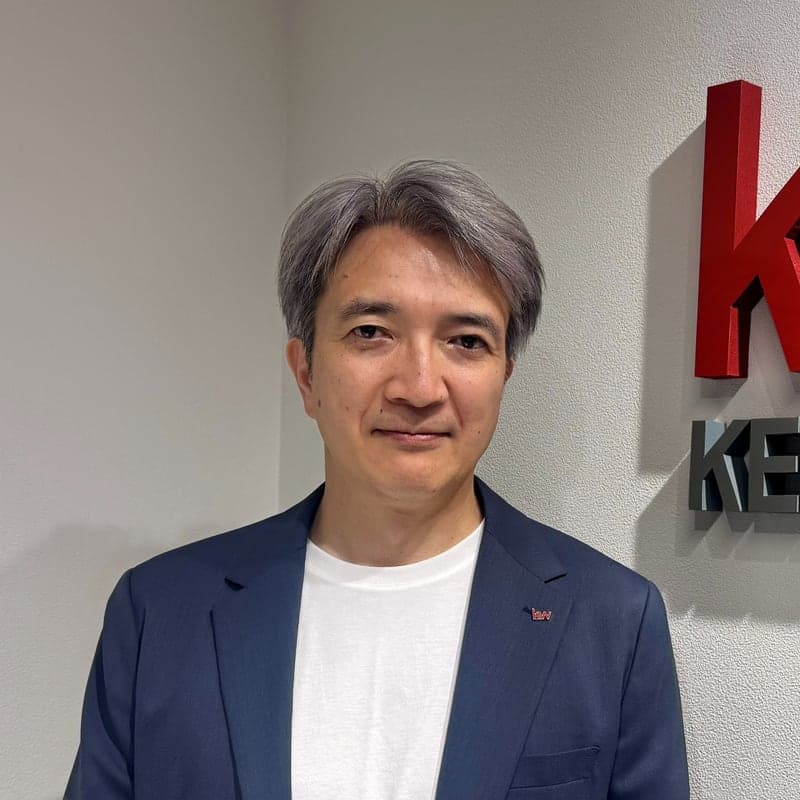
About the author
Yuichi Suzuki(鈴木 裕一)
Founder, Japan YES Property Management · Licensed 宅地建物取引士 (Saitama No. 087841) · Keller Williams Saitama agent
Yuichi helps overseas owners run their Japanese property from abroad — tax representative filings, mail scanning and translation, bill payments and coordination with local companies, in English and Chinese.
Company overviewPurchased Japanese Property from Overseas? Let Us Handle the Management.
Japan YES specializes in remote property management — tax representation (納税管理人), mail scanning & translation, utility payments, and local coordination.
Before you buy
Thinking about buying an akiya? Get the pre-purchase checklist.
The 10 checks that decide whether a ¥500,000 house becomes a ¥9 million one — written by a licensed Japanese real estate agent (宅地建物取引士). Free, no account needed.
More Articles
Kyoto's Empty Home Tax: Who Pays, How Much, and When It Really Starts
Japan's first tax on empty homes targets vacant houses and second homes in Kyoto City. English and Japanese sources keep giving the wrong start date — here is what the city itself says, and what it means for an overseas owner.
Law & ComplianceJapan's Nationality Rule for Property Registration Starts October 5, 2026: What Changes for Foreign Buyers — and What Doesn't
From October 5, 2026, anyone registered as the owner of Japanese real estate must declare their nationality. Headlines call it a crackdown on foreign buyers. It is not a ban: here is exactly what you submit, who it covers, what stays private, and how it fits with Japan's other 2026 nationality rules.